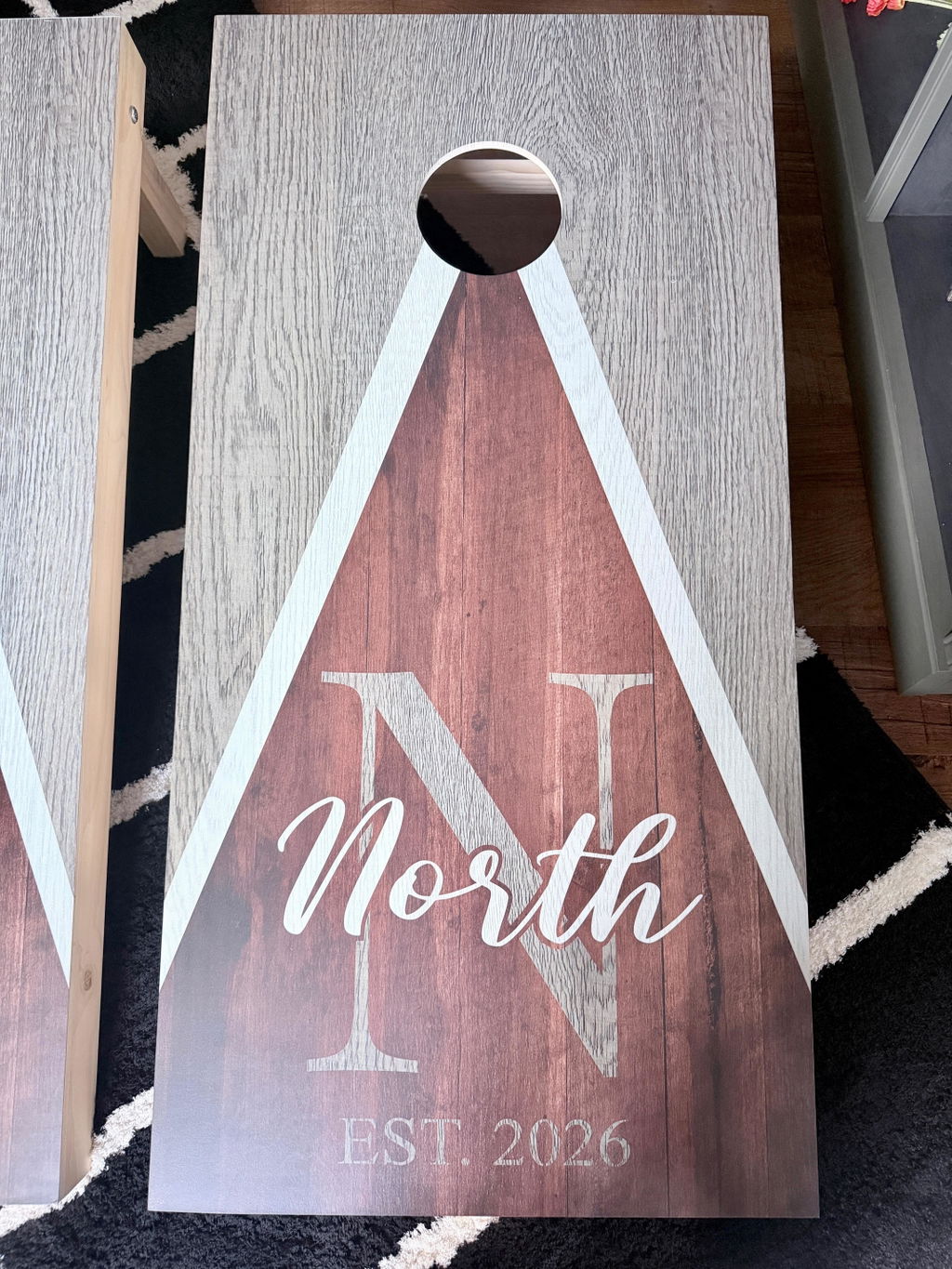
The sound of a cornhole bag slapping against the wood is usually accompanied by the hum of conversation, the clinking of beverages, and the laughter of friends. It is inherently a social game, a staple of tailgates and backyard barbecues across the country. Yet, there is a distinct difference between those who play casually while balancing a plate of food and those who command the court with surgical precision. That difference is built in the quiet moments between the parties.
Practicing alone might feel counterintuitive for such a social sport, but it is the secret weapon of every top-tier player. The ability to refine your toss without the pressure of a score or the distraction of a crowd allows for deep focus and mechanical adjustments that are impossible during a heated match. Solo practice transforms muscle memory from a vague concept into a reliable tool. When you step up to the board at your next gathering, you will not just be hoping for the best; you will be executing a strategy honed through hours of solitary dedication.
The Joy of Solo Cornhole
There is a meditative quality to throwing bags by yourself. Without an opponent, the game shifts from a battle for points to a pursuit of personal excellence. You are no longer reacting to a blocker bag or worrying about the score. Instead, you are free to focus entirely on your mechanics. You can analyze the arc of your throw, the rotation of the bag, and the smoothness of your release.
This isolation allows you to enter a flow state where the only feedback loop is between you, the bag, and the board. If you miss, there is no one to heckle you. If you land a perfect airmail shot, the satisfaction is yours alone. This environment fosters a rapid rate of improvement because you can throw four bags, retrieve them, and throw again immediately. The volume of repetition you can achieve in thirty minutes of solo practice often exceeds what you would get in three hours of social play.
Setting Up Your Solo Cornhole Court
Creating an effective practice environment requires a commitment to consistency. While you can throw bags anywhere, replicating tournament conditions ensures that your practice translates to real games. You need a flat, level surface. Grass is common, but it can be uneven; a driveway or a flat patch of dirt often provides a more reliable experience.
The most critical element of your setup is the distance. The front edges of the boards must be exactly twenty-seven feet apart. Guessing the distance or stepping it off roughly will destroy your depth perception when it matters most. Use a tape measure to ensure precision every time you set up. If you are serious about improvement, you should also invest in quality equipment. Playing with slick, inconsistent bags on warped boards will only teach you bad habits. You need to practice with the same gear the pros use.
This means investing in regulation corn hole bags. These bags have a specific weight, usually between fifteen and sixteen ounces, and are filled with resin pellets rather than corn, which breaks down over time. They also feature dual-sided fabrics—one sticky side for blocking and one slick side for sliding. Using regulation cornhole bags during your solo sessions ensures that every slide, push, and air mail shot reacts exactly as it would in a competitive match.

Drills and Techniques for Solo Practice
Without the structure of a game, it can be easy to simply toss bags aimlessly. To truly improve, you must practice with intent. Drills are designed to isolate specific skills and force you to execute them repeatedly until they become second nature.
The Groove Drill
The foundation of a great cornhole game is the ability to slide a bag right up the center of the board and into the hole. This is your bread-and-butter shot. For this drill, your goal is to land every single bag in the hole using the slide technique. Ignore airmails or blockers for now. Focus entirely on landing the bag on the front of the board and having it travel straight up the middle. If a bag veers left or right, adjust your stance or your release point. Do not move on to the next drill until you can consistently put all four bags in the hole multiple times in a row.
The Airmail Challenge
Once you have mastered the slide, you need to work on the airmail. This is the shot that flies directly into the hole without touching the board, essential for scoring when the board is cluttered with blockers. This requires a higher arc and a softer landing. Practice throwing four bags with the sole intention of swishing them. It is a difficult shot, so do not get discouraged. Even if you miss the hole, landing near it without sliding off the back is a success. Focus on the height of your release and the snap of your wrist to generate the necessary loft.
The Blocker and Push
Advanced strategy involves defensive play. Throw your first bag with the intention of leaving it directly in front of the hole. This is your blocker. Then, use your next three bags to practice pushing that blocker into the hole while following it in with the throwing bag. This simulates a common game scenario where you need to clear the lane. This drill teaches you how to manage force and accuracy simultaneously. You learn exactly how hard you need to throw to move a stationary bag without pushing it off the back of the board.
Making It Fun and Tracking Progress
Solo practice does not have to be a grind. You can gamify your sessions to keep the energy high and the stakes real. One popular method is playing against a "Ghost" opponent. In this scenario, you play a standard game to twenty-one points, but the Ghost scores a predetermined number of points every round.
For a beginner challenge, the Ghost might score five points per round. You throw your four bags and tally your score. Then, you subtract the Ghost's five points. If you outscore the Ghost, you win the round. If not, the Ghost wins. As you get better, increase the Ghost's score to seven, nine, or even twelve points per round. This adds a layer of pressure that mimics a live opponent, forcing you to make every bag count.
Another way to maintain engagement is by keeping a practice journal. Record how many out of one hundred throws go in the hole. Track your longest streak of consecutive scoring shots. Write down which side of the board you struggle with or whether you tend to throw short or long. Seeing concrete data on your performance is incredibly motivating. It turns a vague feeling of "getting better" into measurable proof of your hard work.
Becoming the Player to Beat
The transition from a casual backyard tosser to a feared competitor happens when no one is watching. It happens in the early mornings or late evenings when it is just you and the boards. Solo practice offers a unique opportunity to strip away the distractions and rebuild your game from the ground up.
By setting up a proper court with regulation equipment and committing to structured drills, you build a foundation of consistency that will withstand the pressure of any cookout rivalry or local tournament. The next time you step up to throw with friends, the game will feel slower and the hole will look bigger. You will realize that while cornhole is played with others, winning is learned alone.