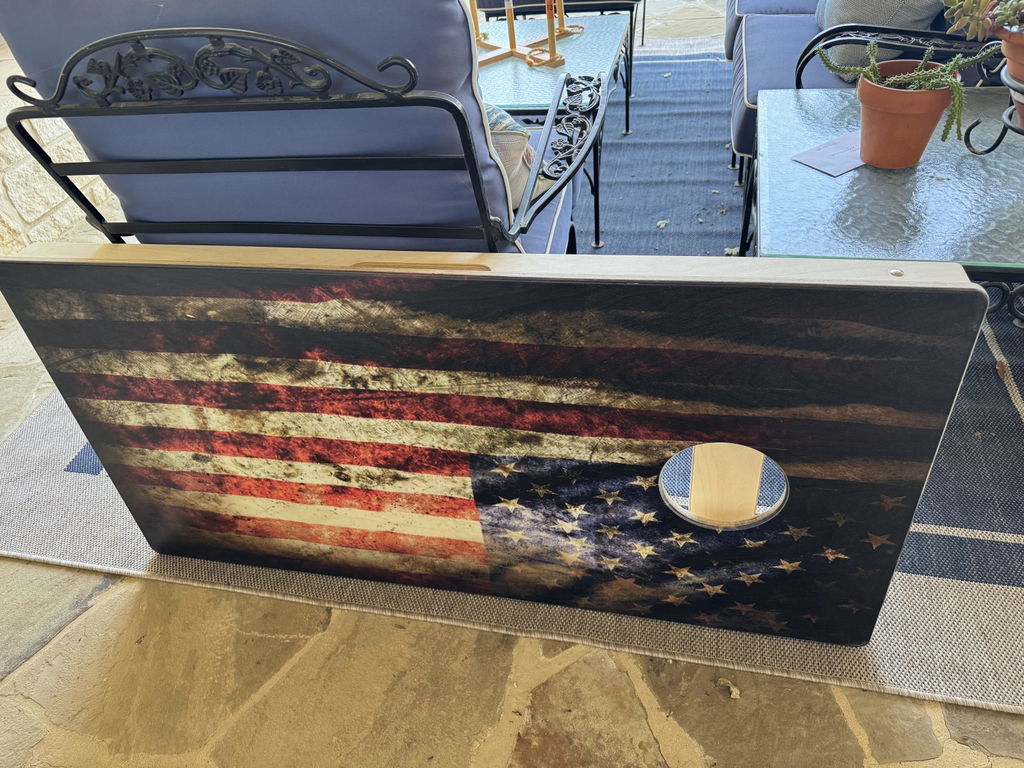
Every cornhole player has experienced that perfect moment when the bag glides through the air with effortless grace, landing exactly where intended. What separates a casual backyard tosser from a tournament champion often comes down to understanding the fundamental physics principles that govern every throw. Whether you're playing on premium Harley Davidson cornhole boards or standard regulation sets, the same scientific laws apply to every bag that leaves your hand.
The game of cornhole might appear simple on the surface, but beneath its straightforward rules lies a complex interplay of forces, angles, and momentum that can make the difference between a satisfying thud in the hole and a disappointing slide off the board. Professional players instinctively understand these principles, even if they can't articulate the scientific terminology behind their techniques.
Understanding the physics behind cornhole transforms your approach from random luck to calculated precision. When you grasp how air resistance affects your bag's trajectory, how spin influences landing dynamics, and how board angle impacts bounce patterns, every throw becomes an opportunity to apply scientific principles for competitive advantage. This knowledge proves invaluable whether you're competing in local tournaments or simply trying to dominate your next backyard barbecue.

The Fundamental Forces at Play
Every cornhole bag experiences multiple forces from the moment it leaves your hand until it comes to rest. Gravity provides the constant downward pull that creates the characteristic arc of any successful throw. This unchanging force means that regardless of your throwing style or the weight of your bag, the downward acceleration remains consistent at approximately thirty-two feet per second squared.
Air resistance creates the most variable force affecting your throw. Unlike gravity, air resistance depends on the bag's velocity, surface area, and orientation during flight. A bag thrown with significant spin encounters different air resistance patterns compared to one thrown with minimal rotation. The fabric texture and fill material of your bags also influence how air molecules interact with the surface of the bag.
Wind conditions add another layer of complexity to the force equation. Even a light breeze can dramatically alter a bag's trajectory, especially during the slower portions of its flight path when the bag becomes more susceptible to lateral air movement. Professional players develop an acute sensitivity to wind patterns, adjusting their throwing power and release angle accordingly.
The coefficient of friction between your bag and the board surface determines how the bag behaves when it comes into contact. Different board materials and surface treatments create varying friction levels, affecting whether a bag slides smoothly toward the hole or stops abruptly upon landing. High-quality boards, such as Harley Davidson cornhole boards, maintain consistent surface characteristics that allow players to develop reliable muscle memory for various throwing scenarios.
Trajectory Mechanics and Optimal Release Points
The parabolic path of a cornhole bag follows predictable mathematical principles that can be optimized for different strategic outcomes. The initial velocity vector at release determines both the maximum height and total distance of your throw. A steeper release angle creates a higher arc with a sharper descent, while a flatter angle produces a lower trajectory with more forward momentum upon landing.
Release height significantly impacts the flight characteristics of your bag. Taller players naturally release from a higher position, creating a steeper descent angle that can be advantageous for direct hole shots but may result in more bags sliding off the back of the board. Shorter players often develop throwing techniques that compensate for their lower release point by adjusting their arm motion and follow-through.
The optimal release point varies depending on your strategic objective. Bags intended to slide into the hole require different trajectory calculations than those meant to block opponent shots or create defensive positioning. Understanding these variations enables you to consciously select the most suitable throwing mechanics for each tactical situation.
Timing your release relative to your arm's swing creates consistency in your throwing motion. The bag should leave your hand at the point where your arm reaches maximum forward velocity while maintaining control over direction and spin. This sweet spot in your throwing motion becomes more intuitive with practice, but can be accelerated through conscious attention to the biomechanics involved.
The Role of Spin and Rotation
Bag rotation during flight serves multiple purposes beyond simply looking impressive. Backspin creates a stabilizing gyroscopic effect that helps maintain the bag's orientation and reduces tumbling during flight. This stability proves particularly valuable in windy conditions where an unspinning bag might become erratic.
The Magnus effect, caused by the interaction between a spinning object and air flow, can subtly alter the trajectory of your bag. While less pronounced than in sports like baseball or tennis, this effect still influences cornhole bags, especially during longer throws or in crosswind conditions. Understanding this phenomenon helps explain why some throws seem to curve slightly during flight.
Spin also affects landing dynamics when the bag makes contact with the board surface. A bag with appropriate backspin tends to check up more quickly upon landing, reducing the likelihood of sliding off the board or overshooting the hole. Conversely, a bag with excessive forward spin may skid further than anticipated, potentially sliding past scoring opportunities.
The amount of spin imparted depends on your grip, release technique, and follow-through motion. Consistent spin application requires developing muscle memory for your release point and maintaining similar hand positions across multiple throws. This consistency becomes particularly important during competitive play, where small variations can compound into significant scoring differences.
Board Angle and Surface Interactions
The standard cornhole board angle of approximately twelve degrees creates specific physics challenges that separate casual players from serious competitors. This upward slope means that bags must overcome both gravity and the inclined surface of the board to reach the hole. Understanding how this angle affects bag behavior helps inform throwing strategy and the selection of power.
Different areas of the board create varying challenge levels due to the interaction between the slope and bag momentum. Bags landing near the front edge have more board length to decelerate before potentially sliding off, while those landing closer to the hole must have precise velocity to avoid overshooting. This creates distinct target zones with different risk-reward profiles.
The surface material and finish of your boards significantly influence the behavior of the bag upon contact. Smooth surfaces allow bags to slide more freely, requiring greater precision in velocity control. Textured surfaces provide more friction, offering forgiveness for slightly overpowered throws but potentially stopping bags short of optimal positioning. Premium boards, such as Harley Davidson cornhole boards, maintain consistent surface characteristics that eliminate variables from your throwing equation.
Weather conditions affect board surface properties through changes in temperature and humidity. Cold conditions may make surfaces more slippery, while humidity can increase friction levels. Experienced players adjust their throwing power and technique based on these environmental factors, treating the board surface as another variable to master, rather than simply adapting to it.
Advanced Throwing Techniques and Their Scientific Basis
Professional cornhole players employ various throwing techniques, each with distinct physics advantages for specific situations. The traditional overhand throw provides maximum control over bag rotation and release point, making it ideal for precision shots and consistent repeatability. The biomechanics of this motion enable fine adjustments in power and spin without significantly altering the fundamental throwing pattern.
Sidearm throwing techniques sacrifice some precision for increased bag speed and different spin characteristics. The lateral release creates unique Magnus effect patterns that can be advantageous in crosswind conditions or when attempting to slide bags around obstacles. However, the more complex motion increases the potential for inconsistency, making this technique better suited for experienced players.
Underhanded approaches minimize the vertical component of the throw, creating flatter trajectories that can be useful for sliding bags under opponent defenses. The physics of this motion reduces air time and emphasizes ground-contact dynamics, requiring different velocity and spin calculations compared to traditional overhand techniques.
The follow-through portion of any throwing motion continues to influence bag behavior even after the ball is released. Proper follow-through ensures consistent spin application and helps maintain accuracy by preventing early deceleration of the throwing motion. This biomechanical principle applies regardless of your chosen throwing style but requires specific attention to develop properly.
Environmental Factors and Adaptation Strategies
Wind represents the most significant environmental variable affecting cornhole performance. Headwinds create additional air resistance, reducing the distance a bag can be carried and requiring increased throwing power to maintain consistent landing positions. Tailwinds have the opposite effect, potentially causing bags to carry further than intended and requiring power adjustments.
Crosswinds create lateral forces that push bags off their intended flight path. The magnitude of this effect increases with air time, making higher-arcing throws more susceptible to wind drift than flatter trajectories. Professional players often adjust their aim point to compensate for anticipated wind drift rather than fighting against the natural forces.
Temperature affects both bag characteristics and air density, resulting in subtle yet measurable performance changes. Cold conditions make bag materials stiffer, potentially altering their aerodynamic properties and surface friction characteristics. Hot weather has the opposite effect, making bags more pliable and potentially changing their flight characteristics.
Altitude changes air density enough to affect the flight of a bag in extreme cases. Higher elevations provide less air resistance, allowing bags to carry slightly further than at sea level. While this effect is minimal in most playing situations, tournament players who travel between significantly different elevations may notice the difference and adjust accordingly.
Mastering the Science for Competitive Advantage
Understanding cornhole physics transforms your approach from intuitive guessing to calculated decision-making. Every throw becomes an opportunity to apply scientific principles, whether you're calculating the optimal power for specific wind conditions or selecting the appropriate spin technique for defensive positioning. This analytical approach accelerates skill development by providing clear cause-and-effect relationships between technique and results.
Consistent application of physics principles requires dedicated practice with attention to measurable variables. Rather than simply throwing bags repeatedly, focus on isolating specific elements, such as release point consistency, spin application, or power control. This systematic approach develops the muscle memory necessary to execute complex physics calculations instinctively during competitive play.
Equipment quality plays a crucial role in applying physics principles effectively. Inconsistent bags or poorly constructed boards introduce variables that mask the relationship between technique and results. Investing in premium equipment, such as Harley Davidson cornhole boards, eliminates these variables, allowing you to focus on perfecting your understanding and application of the underlying physics.
The science of cornhole extends beyond individual throwing mechanics to include strategic applications of physics principles. Understanding how different bag weights and fills affect trajectory calculations, how board positioning influences optimal throwing angles, and how environmental conditions modify standard physics relationships provides competitive advantages that separate knowledgeable players from those relying solely on natural athletic ability.