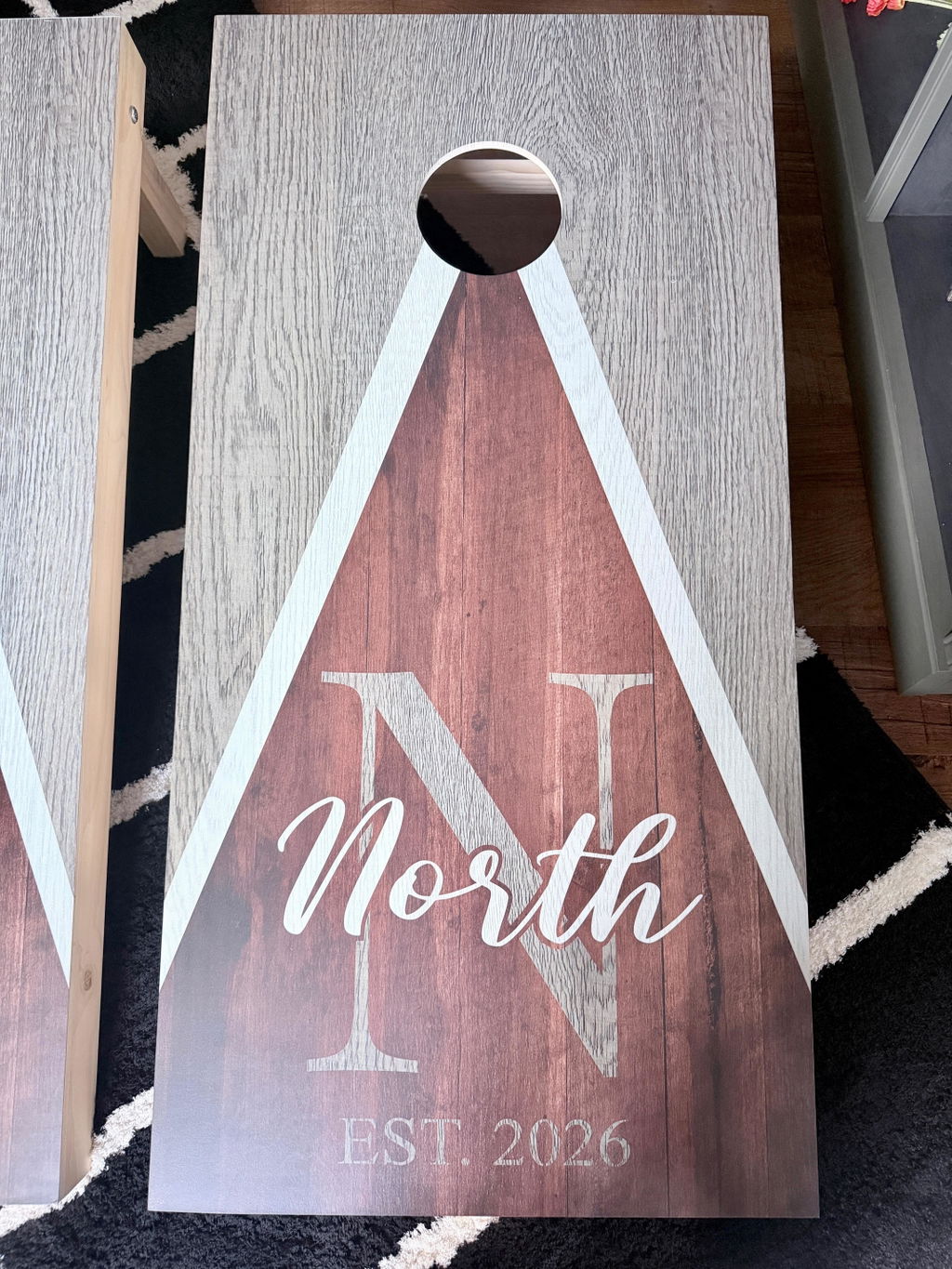
Cornhole looks simple from the sidelines. Two boards, eight bags, and a hole twenty-seven feet away. But anyone who has competed at a serious level knows that the gap between a casual backyard player and a true competitor often comes down to one overlooked skill: bag rotation.
Professional players obsess over it. Tournament veterans practice it for hours. And yet, most recreational players have never given it a second thought. Mastering the spin on your flat bag is one of the most effective ways to improve consistency, accuracy, and overall performance, regardless of whether you're playing on a polished hardwood surface or weathered outdoor boards at a tailgate.
This guide breaks down everything you need to know about cornhole bag rotation: the physics behind it, how to develop the perfect horizontal spin, the mistakes that are silently ruining your throw, and advanced techniques for adapting your spin to different board conditions. By the time you finish reading, you'll have a clear roadmap to elevating your game—and a set of drills to put it all into practice.
Why Bag Rotation Matters More Than You Think
Most players focus on arc and release point when troubleshooting their throw. Rotation barely enters the conversation—but it should be the starting point.
A flat bag that travels through the air without a clean horizontal spin is subject to air resistance. It wobbles, drifts, and behaves unpredictably on landing. A bag thrown with proper rotation, on the other hand, cuts through the air with stability and lands with intention. It slides where you want it to, or it adheres where you want it to.
At the highest levels of competition, the ability to control a bag's behavior after landing is just as important as accuracy. Rotation is the mechanism that gives you that control.
The Physics of the Flat Bag in Flight
To understand why rotation works, it helps to understand what's happening to your bag the moment it leaves your hand.
A cornhole bag is a flexible, fabric projectile. Unlike a disc or a ball, it has no inherent aerodynamic structure. When thrown without spin, the bag tumbles unpredictably through the air. Air pressure acts unevenly on its surface, causing it to yaw (rotate on a vertical axis) or pitch (flip end over end). The result is what players call a "turkey bag"—a throw that arrives at the board looking chaotic and behaves accordingly.
Horizontal spin changes the equation entirely. When a flat bag rotates cleanly on its horizontal axis during flight, the gyroscopic effect kicks in. Gyroscopic stability is the same principle that keeps a spinning top upright. Applied to a cornhole bag, it keeps the bag level and oriented correctly throughout its flight path. The bag arrives at the board face flat, giving you a predictable slide toward the hole or a controlled stick on the surface.
The keyword is "horizontal." A vertical spin—where the bag rotates end over end—works against you. It introduces unpredictable bounce and dramatically reduces your ability to control post-landing behavior.
How to Achieve the Perfect Horizontal Spin
Developing a clean horizontal spin requires focusing on three fundamentals: grip, release point, and follow-through. These three elements work together, and a weakness in any one of them will compromise the others.
Grip
Hold the bag flat across your fingers rather than pinching it between your thumb and index finger. Your fingers should be spread slightly beneath the bag, with your thumb resting lightly on top to stabilize it. Think of it as cradling the bag rather than gripping it. This flat, open grip provides the surface area needed to impart a clean, even spin at release.
Avoid gripping too tightly. Tension in your hand is transmitted to the bag, causing unwanted rotation. The throw should feel relaxed and controlled, not forced.
Release Point
Your release point is everything. For a horizontal spin, you want the bag to leave your hand at roughly hip height on your forward swing, with your fingers rolling smoothly off the bottom of the bag as it releases. This rolling motion is what generates the spin.
Imagine skipping a stone across water. The release mechanism is similar—a smooth, flat exit from your hand that causes the bag to rotate on its horizontal axis. Releasing too early causes the bag to climb too steeply. Releasing too late flattens the trajectory and kills the spin.
Follow-Through
Your follow-through should finish with your hand pointing directly at your target, fingers extended and palm facing down. A palm-down finish naturally reinforces the horizontal spin. If your palm is facing upward at the end of your throw, you're likely generating vertical spin or no spin at all.
Practice the follow-through in isolation. Stand at the board and go through the motion slowly, pausing at the release to check your hand position. Muscle memory built through deliberate repetition will make the correct mechanics feel natural during competition.
Common Mistakes That Lead to Wobble and Turkey Bags
Even players who understand the mechanics of bag rotation fall into habits that undermine their throw. These are the most common culprits.
Gripping the corners. Pinching a bag at its corners encourages end-over-end rotation rather than a flat spin. If your bag is flipping rather than spinning, start with your grip.
Rushing the release. Anxious throwers tend to release the bag before their swing has fully committed to the target. An early release sends the bag off-axis from the start, and no amount of spin can correct a bag that was never aimed correctly.
Collapsing the wrist. A wrist that rolls inward during the release introduces sidespin, which curves the bag off its intended path. Keep your wrist firm and neutral through the release point.
Ignoring the non-throwing arm. Your non-throwing arm plays a stabilizing role in your stance. Players who allow it to drop or swing freely often compromise their balance and introduce subtle but significant inconsistencies in their throw.
Throwing from the shoulder only. A cornhole throw should engage your entire kinetic chain—legs, hips, core, and shoulder—not just your arm. Shoulder-dominated throws lack power regulation and consistency. Players who rely too heavily on arm strength tend to overshoot when they're fresh and undershoot when they're fatigued.
Advanced Techniques for Adjusting Rotation Based on Board Conditions
No two boards play the same way, and the ability to adapt your rotation for different surface conditions separates good players from great ones.
On slick boards—typically freshly finished or lacquered surfaces—a bag with strong horizontal spin will slide aggressively after landing. Under these conditions, reduce your spin slightly and aim for the upper portion of the board to allow the slide to carry the bag toward the hole. If you throw with full spin to the center of the board, the bag will often slide right past the hole.
On rough or weathered boards, the surface friction absorbs much of the bag's post-landing energy. Here, a stronger spin and a more direct line to the hole are the better strategy. The bag is less likely to slide away from your intended landing spot, so you can be more aggressive with your rotation and aim.
Temperature and humidity also affect board behavior. Boards tend to play faster in dry, warm conditions and slower in humid or cooler weather. Apply this awareness in every game and make small adjustments to your spin intensity as needed.
For players who use both the slide and the air hole as viable routes to scoring, developing two distinct rotation speeds—one for surface play and one for airmail throws—gives you a significant tactical advantage. Airmail throws benefit from tighter, faster spin because the bag must maintain stability over a longer flight path before landing directly in or near the hole.

Build Consistency Through Targeted Practice
Understanding rotation is one thing. Ingraining it is another. These drills will help you develop the feel for a clean horizontal spin and build the muscle memory needed to reproduce it under pressure.
The first drill focuses purely on release. Stand three feet from the board and make slow, deliberate throws, concentrating entirely on your hand position at the moment of release. You're not trying to reach the board at this distance—you're training your fingers to roll off the bag correctly. Move back to regulation distance only once the release feels natural and repeatable.
The second drill targets consistency under fatigue. Throw fifty bags in sequence without pausing, tracking how many land flat versus how many wobble. Fatigue exposes mechanical weaknesses that don't show up in short practice sessions. If your rotation degrades significantly after twenty or thirty throws, you're compensating with arm strength rather than relying on proper mechanics.
The third drill is a rotation-awareness exercise. Ask a throwing partner to stand beside the board and call out "flat" or "wobble" for each throw. External feedback accelerates the learning process far more effectively than self-assessment alone.
At Skip's Garage, we know that great players deserve great equipment. If you're serious about sharpening your game, the board you practice on matters. Our custom cornhole boards are built to exacting standards—solid construction, consistent surface finishes, and designs that withstand thousands of throws. We personally guarantee your satisfaction, no questions asked. Explore our full range of premium custom cornhole boards, including our popular baseball team cornhole boards, and find the set that matches your game