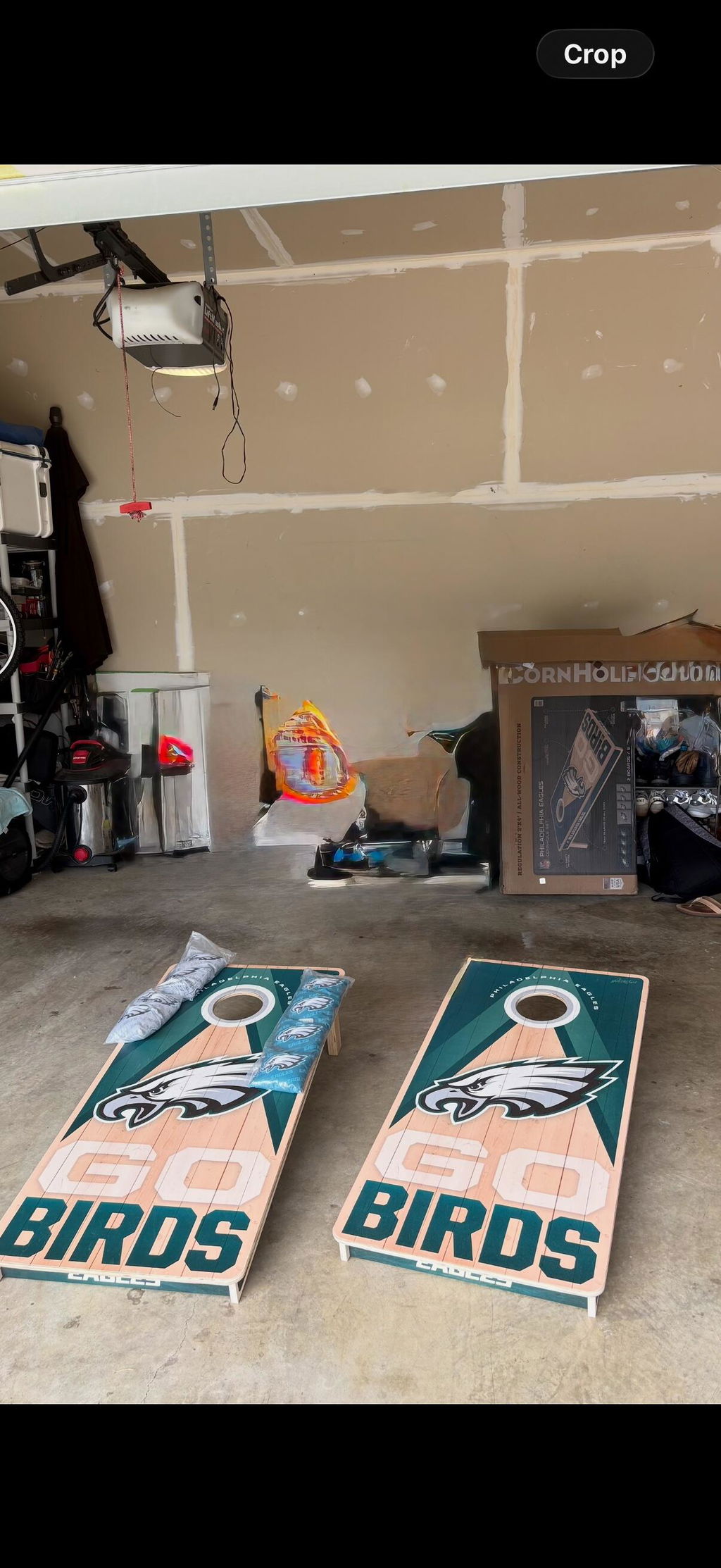
Whether you're a weekend warrior tossing bags at a backyard barbecue or a competitive player eyeing tournament glory, improving your cornhole skills doesn't require years of practice or expensive equipment. The beauty of this classic American lawn game lies in its accessibility—anyone can pick up regulation corn hole bags and start playing within minutes. Yet mastering the nuances that separate casual tossers from consistent winners takes knowledge, technique, and the right approach.
At Skip's Garage, we've watched thousands of players develop their skills on our custom cornhole boards, and we've noticed consistent patterns among those who improve fastest. The good news? Most improvements come from understanding fundamental principles rather than innate athletic ability. By focusing on specific aspects of your stance, grip, release, and strategy, you can achieve measurable improvements in accuracy and consistency within just a few practice sessions.
This guide breaks down ten proven methods to instantly upgrade your cornhole performance. These aren't theoretical concepts—they're practical adjustments you can implement during your very next game. From understanding the rules for cornhole that govern official play to fine-tuning your throwing mechanics, each tip addresses a specific element that directly impacts your scoring potential.
Perfect Your Stance Before You Throw
Your foundation determines everything that follows. Stand with your feet shoulder-width apart, positioning your body at a slight angle to the board rather than facing it directly. This angled stance allows for a more natural arm swing and reduces strain on your shoulder throughout extended play sessions.
Keep your weight balanced on the balls of your feet, not your heels. This forward weight distribution provides better control and allows for subtle adjustments mid-throw, if needed. Your knees should remain slightly bent—never locked—creating a stable yet flexible base that absorbs the natural momentum of your throwing motion.
Many players make the mistake of standing rigidly or shifting their stance between throws. Consistency matters tremendously in cornhole. Once you find a comfortable stance that produces good results, replicate it exactly for every single throw. Your muscle memory will develop faster when your body starts from the same position each time.
Master the Four-Finger Grip
How you hold regulation corn hole bags significantly affects your accuracy and spin control. The most reliable grip involves placing all four fingers underneath the bag with your thumb resting on top, creating a stable platform that distributes pressure evenly across the bag's surface.
Position the bag so it sits naturally in your palm without requiring excessive squeezing. If you're gripping too tightly, your release will be jerky and inconsistent. The bag should feel secure but not strangled—imagine holding a bird that you don't want to escape but also don't want to harm.
Experiment with where exactly your fingers contact the bag. Some players prefer their fingertips closer to the center of the bag for more spin, while others position them near the edge for a flatter trajectory. There's no universally correct answer, but once you discover what works for your throwing style, maintain that exact finger placement for every toss.
Develop a Pendulum Arm Swing
The most consistent cornhole players throw with a smooth pendulum motion, allowing gravity and momentum to do most of the work rather than relying on arm strength. Start with your throwing arm extended behind you, then swing forward in one fluid arc, releasing the bag at the lowest point of the swing's forward motion.
Avoid the common mistake of "pushing" the bag toward the board using primarily your shoulder and elbow. This muscular approach introduces too many variables and tires you out during longer games or tournaments. Instead, think of your arm as a pendulum weight—once you initiate the backward motion, the forward swing should feel almost effortless.
Your elbow should remain relatively straight throughout the motion, with minimal bending or extension. The power comes from your shoulder rotation and the natural acceleration of the pendulum swing, not from flicking your wrist or extending your elbow at release. This biomechanically efficient motion not only enhances accuracy but also reduces fatigue and the risk of injury.
Focus Your Eyes on the Target
This seems obvious, yet many players make the mistake of watching their hand or the bag during their throw. Your eyes should lock onto your specific target on the board—whether that's the hole for a cornhole or a particular spot on the board's surface for a slide shot—before you even begin your throwing motion.
Maintain that visual focus from the moment you set up your stance until after you've released the bag. Your brain and body work together remarkably well when given a clear visual target. The moment you glance away or shift your attention, your accuracy suffers dramatically.
Advanced players develop the ability to spot-target, aiming for specific areas just a few inches wide rather than generally "aiming for the hole." This precision targeting comes naturally once you've trained yourself to maintain unwavering visual focus throughout your entire throwing motion and follow-through.

Control Your Release Point
The moment you let go of the bag determines its trajectory more than any other single factor. For most players, the optimal release point occurs when your throwing hand reaches approximately knee height during the forward pendulum swing. Releasing too early sends the bag high with an arcing trajectory, while releasing too late causes it to nose-dive into the ground before reaching the board.
Practice your release timing by focusing on maintaining a consistent release point across multiple throws. You'll quickly notice patterns—if your bags consistently land short, you're releasing too late; if they're sailing over the board, you're releasing too early. Make small adjustments until you find the sweet spot that produces the desired trajectory.
Many players benefit from incorporating a mental cue or counting system. Some count "one, two, three, release" to maintain consistent timing. Others focus on a physical sensation, such as releasing the bag when their thumb passes over their front knee. Find a system that works for your rhythm and stick with it religiously.
Understand Arc Versus Slide Strategies
According to the official rules for cornhole, bags can score by going through the hole or landing on the board's surface. Understanding when to use each approach strategically separates average players from competitive ones.
The arc shot aims directly for the hole with a higher trajectory, dropping the ball into the target from above. This aggressive approach maximizes your scoring potential with three-point cornholes but carries a higher risk. Missed arc shots often slide off the board entirely, earning zero points.
The slide shot uses a flatter trajectory, intentionally landing the bag on the board's surface with enough forward momentum to slide toward the hole. This conservative approach prioritizes consistency, usually guaranteeing at least one point even if the bag doesn't reach the hole. Skilled players can control their slide shots precisely, positioning bags strategically to block opponents or set up multiple scoring opportunities.
Adapt your strategy based on the game situation. When you're ahead late in the game, slide shots protect your lead by banking safe points. When you're behind, aggressive arc shots give you the best chance to catch up quickly. Reading the game flow and adjusting your approach accordingly demonstrates advanced cornhole IQ.
Practice with Quality Equipment
Your skill development will only progress as far as your equipment allows. Cheap, inconsistent bags and warped boards introduce unnecessary variables that make improvement nearly impossible. At Skip's Garage, we emphasize the use of quality materials and precise construction because we know that consistent equipment directly translates to player improvement.
Regulation cornhole bags should weigh exactly 16 ounces and measure 6 inches square. This standardization ensures that muscle memory developed during practice translates directly to tournament play. Bags that are too light sail unpredictably in the wind, while overweight bags require more force and follow different trajectories.
Board quality matters just as much. Properly constructed boards feature a smooth, consistent playing surface that allows bags to slide predictably. The regulation fifteen-degree slope angle provides the optimal challenge level—steep enough to be interesting but not so severe that accurate throws regularly slide off. We personally guarantee that Skip's Garage boards meet exact specifications because we understand the crucial importance of equipment consistency to skill development.
Learn to Read and Adjust for Conditions
Environmental factors dramatically impact bag behavior, yet many players ignore these variables entirely. Wind significantly affects the regulation of lightweight corn hole bags, requiring adjustments of several inches depending on wind speed and direction. Before each game, take a few practice throws to gauge current conditions.
Temperature and humidity also matter more than most players realize. Cold, dry conditions make bags firmer and less sticky, causing them to slide farther across the board. Hot, humid weather has the opposite effect—bags become slightly tacky and stop shorter. Experienced players adjust their throwing force based on these conditions rather than using the same power level regardless of the weather.
Board surface conditions change throughout extended play sessions. Morning dew makes surfaces faster, while afternoon sun can create tackier spots where bags stick more readily. Pay attention to how bags are behaving during warm-up rounds and adjust your strategy accordingly. This situational awareness distinguishes thoughtful players from those who mindlessly repeat the same throws, regardless of the circumstances.
Develop a Pre-Throw Routine
Professional athletes across all sports use pre-performance routines to achieve consistency under pressure. Cornhole benefits from the same psychological principle. Develop a personal routine that you execute identically before every single throw, creating a mental trigger that puts you in the optimal performance state.
Your routine might include taking a deep breath, adjusting your grip three times, visualizing the bag's flight path, and stepping into your stance. The specific elements matter less than the consistency—performing the same sequence every time trains your brain to associate that routine with optimal performance.
This becomes especially valuable during pressure situations. When you're throwing with the game on the line and nerves threaten your composure, executing your familiar pre-throw routine provides a calming anchor. Your body recognizes the routine and automatically enters the same focused state you've practiced hundreds of times before.
Analyze and Learn from Each Throw
Every throw provides feedback if you're paying attention. Rather than thoughtlessly tossing all your bags in rapid succession, pause briefly after each throw to analyze what happened and why. Did the bag go where you intended? If not, what specific aspect of your mechanics caused the deviation?
This analytical approach accelerates improvement dramatically compared to mindless repetition. You might notice that throws when you're standing with more weight on your front foot tend to land shorter, or that releases when your elbow bends slightly send bags to the right. These patterns become obvious only when you actively look for them.
Consider recording yourself playing and reviewing the footage later. Video analysis reveals mechanical inconsistencies that you may not be able to feel during play. You might discover that your stance shifts between throws, that your arm swing isn't as smooth as you thought, or that your release point varies more than you realized. At Skip's Garage, we've seen countless players make rapid improvements once they could visually identify their specific mechanical issues.
Transform Practice into Performance
Understanding these ten principles provides the foundation for cornhole excellence, but knowledge alone won't cause bags to drop through holes. Improvement requires deliberate practice, focused sessions where you consciously implement these techniques and pay attention to results.
Start by working on one element at a time rather than trying to change everything simultaneously. Spend an entire practice session perfecting your stance, then another session exclusively on your grip, then another on release timing. This focused approach allows your muscle memory to develop properly before adding additional complexity.
At Skip's Garage, our commitment extends beyond simply selling you custom cornhole boards and regulation corn hole bags. We want to see you succeed and enjoy this fantastic game to its fullest. That's why we construct every board with tournament-grade materials and precise specifications. We know that quality equipment removes barriers to improvement and lets your developing skills shine through.
The difference between casual players and competitive ones isn't natural talent or years of experience. It's understanding these fundamental principles and consistently applying them every single time you step up to throw. Whether you're hosting a backyard tournament, competing in league play, or just trying to beat your annoying brother-in-law at the family reunion, finally, these ten tips provide the framework for immediate, measurable improvement.
We personally guarantee that implementing these techniques on quality equipment will transform your cornhole game. The path from novice to skilled player is shorter than most people think—it just requires the right knowledge, quality equipment, and consistent practice.