The difference between a winning toss and a frustrating miss often comes down to one crucial element that many players overlook: grip. Whether you're stepping up to the boards for the first time or looking to refine your tournament-level technique, understanding cornhole grip styles can transform your game from amateur to ace.
Your grip affects everything from bag rotation to landing accuracy. The way you hold that cornhole bag determines whether it slides smoothly into the hole or bounces awkwardly off the board. With countless grip variations used by players across the country, finding the right one for your playing style, hand size, and comfort level makes all the difference.
This comprehensive guide explores the most effective cornhole grip techniques, helping you discover which approach will elevate your performance. From traditional grips used by weekend warriors to advanced techniques employed by professional players, we'll break down the mechanics, advantages, and ideal situations for each style.
Understanding Grip Fundamentals
Before diving into specific grip styles, it's essential to grasp what makes an effective cornhole grip. The primary goal is achieving consistent bag release while maintaining control over rotation, arc, and power. Your grip should feel natural and repeatable, allowing you to execute the same motion consistently without strain or discomfort.
The cornhole bag itself influences grip selection. Standard regulation bags measure six inches by six inches and weigh between 15 and 16 ounces when properly filled. The fabric texture, fill material, and bag construction all impact how securely you can hold the bag during your throwing motion.
Hand positioning significantly affects the bag's flight path. A grip that's too tight restricts natural wrist action and can cause erratic releases. Conversely, a grip that's too loose reduces control and consistency. Finding that sweet spot between control and fluidity separates good players from great ones.
Temperature and weather conditions also influence grip effectiveness. Hot, humid conditions can make bags feel slippery, while cold weather might stiffen both the bag material and your hand flexibility. Adapting your grip to environmental factors becomes crucial for maintaining consistent performance throughout different playing conditions.
The Traditional Four-Finger Grip
The four-finger grip remains the most popular choice among recreational players and serves as an excellent starting point for beginners. This technique involves grasping the bag with all four fingers on one side while the thumb provides support on the opposite side. The bag rests comfortably in the palm, creating a secure foundation for consistent throws.
Players using this grip typically position their fingers near the center of the bag, distributing pressure evenly across the surface. The thumb placement varies among individuals, with some preferring it directly opposite the fingers while others angle it slightly toward one corner. Experimentation helps determine the most comfortable and effective thumb position for your hand size and throwing style.
This grip excels in providing stability and control, making it ideal for players focusing on accuracy over power. The secure hold enables precise targeting, particularly when attempting to land bags in specific areas of the board or block opponents' scoring opportunities. Many successful recreational players never feel the need to abandon this reliable technique.
The four-finger grip does have limitations in competitive play. Generating significant bag rotation becomes challenging, potentially reducing the bag's ability to slide smoothly across the board surface. Additionally, power generation may be somewhat restricted compared to more dynamic grip styles favored by advanced players.
The Pinch Grip Method
Advanced players often gravitate toward the pinch grip, which involves grasping the bag between the thumb and index finger, with the remaining fingers providing minimal contact or support. This technique requires more precision and practice but offers greater control over bag rotation and release timing.
The pinch point typically occurs near one corner of the bag, allowing the remaining portion to hang freely during the throwing motion. This positioning enables players to impart specific spin characteristics while maintaining excellent control over direction. The reduced contact area with the bag allows for cleaner releases and more consistent flight patterns.
Mastering the pinch grip requires considerable practice, as the reduced surface contact initially makes the bag feel less secure. Players transitioning from traditional grips often experience a temporary decrease in accuracy as they develop the muscle memory and confidence required for this technique. However, the long-term benefits in terms of precision and versatility make the learning curve worthwhile.
Weather sensitivity represents the primary drawback of pinch grips. Moisture, temperature extremes, or worn bag surfaces can significantly impact the secure connection between thumb and finger. Players relying on this technique often carry backup bags or modify their grip slightly when conditions become challenging.
Two-Finger Techniques
The two-finger approach provides a middle ground between traditional four-finger stability and pinch grip precision. Players using this method typically employ the index and middle fingers along with the thumb, creating a tripod-like hold that offers both security and flexibility.
Finger placement variations within this category enable customization based on hand anatomy and individual throwing preferences. Some players position their fingers parallel along one edge of the bag, while others prefer a diagonal arrangement that follows the bag's corner-to-corner line. The thumb's role remains consistent across variations, providing the primary opposing pressure point.
This grip style facilitates excellent bag rotation control, enabling players to adjust spin rates according to board conditions and strategic requirements. Dry boards might call for minimal rotation to prevent bags from sliding past the hole, while slick surfaces benefit from increased spin to help bags grab and settle into scoring positions.
Two-finger techniques require more practice than traditional grips but prove easier to master than pure pinch methods. The additional finger contact provides confidence during the learning phase while still offering the precision benefits sought by competitive players. Many tournament-level players consider this approach the optimal balance between control and versatility.
Specialty Grips for Specific Situations
Certain playing conditions or strategic situations call for modified grip techniques that address specific challenges. Wind conditions, for instance, might require adjustments to standard grips to maintain accuracy and consistency. Crosswinds can push bags off target, while headwinds or tailwinds affect trajectory and landing characteristics.
The palm-heavy grip becomes valuable in windy conditions, where maximum bag contact and control help counteract the effects of air movement. This technique involves spreading fingers across a larger portion of the bag surface while maintaining thumb opposition. The increased surface contact provides a better feel for the bag's position throughout the throwing motion.
Wet or humid conditions often necessitate grip modifications to account for reduced friction between the hand and the bag. Some players adopt a more claw-like finger positioning that increases pressure points without over-gripping. Others adjust their thumb placement to create additional security without sacrificing release smoothness.
Strategic situations within games sometimes call for grip changes mid-match. Defensive throws aimed at blocking opponents might benefit from grips that prioritize accuracy over rotation, while aggressive scoring attempts could require maximum spin generation. Versatile players develop comfort with multiple grip styles to adapt their approach based on game circumstances.
Grip Selection Based on Playing Style
Your overall cornhole playing philosophy should significantly influence your grip selection. Defensive-minded players who prioritize consistency and blocking often benefit from more secure, traditional grip approaches. These techniques provide the reliability needed for precise bag placement and tactical positioning throughout long matches.
Aggressive players seeking to maximize scoring opportunities might gravitate toward grips that enable powerful, spinning throws. The ability to generate significant bag rotation helps create favorable bounces and sliding action that can overcome minor targeting errors. High-spin techniques also prove valuable for recovering from difficult board positions.
Power players focusing on airmail shots and hard landings require grips that facilitate clean releases at higher throwing velocities. The bag must separate from the hand smoothly to maintain accuracy despite increased force. Grips with minimal contact points often serve these players better than complex multi-finger approaches.
Finesse players who rely on touch and feel benefit from grips that provide maximum sensory feedback throughout the throwing motion. The ability to sense bag position and rotation during release helps these players make subtle adjustments that can mean the difference between scoring and missing entirely.
Common Grip Mistakes and Corrections
Over-gripping represents the most frequent error among developing players. Excessive hand tension restricts natural throwing motion and creates inconsistent release points. The bag should feel secure without requiring a death grip that fatigues hand muscles or interferes with smooth arm action.
Inconsistent finger placement between throws undermines muscle memory development and creates erratic results. Establishing a pre-throw routine that includes specific grip positioning helps ensure repeatability throughout extended playing sessions. Many successful players develop ritualistic approaches to bag preparation and establishing a grip.
Neglecting thumb positioning often leads to directional control issues. The thumb serves as a crucial stabilizing force that influences both bag security and release characteristics. Proper thumb pressure and placement require as much attention as finger positioning for optimal grip effectiveness.
Failing to adapt grips based on conditions represents a strategic oversight that can cost games. Players who rigidly stick to one grip style regardless of weather, board conditions, or game situations miss opportunities to optimize their performance. Developing versatility with multiple grip approaches provides significant competitive advantages.
Developing Your Personal Grip Style
Finding your ideal grip requires systematic experimentation with different techniques under various conditions. Begin with traditional four-finger approaches to establish a baseline of comfort and accuracy, then gradually explore more advanced options as your skills develop. Document which grips feel most natural and produce the best results for your throwing style.
Practice sessions should include deliberate grip work, not just general throwing repetition. Spend dedicated time working with specific grip styles to develop the muscle memory and confidence required for consistent execution. Many players benefit from initially isolating grip practice from distance and accuracy work.
Physical factors, such as hand size, finger length, and grip strength, influence which techniques are most effective for individual players. Smaller hands might find pinch grips more challenging, while larger hands could struggle with precise finger positioning in confined spaces. An honest assessment of your physical capabilities guides the selection of effective techniques.
Playing experience reveals which grip styles perform best under pressure and fatigue. Tournament conditions often expose weaknesses in grip techniques that seem solid during casual practice. Building experience with your chosen grip style across various competitive situations ensures reliability when games matter most.
Perfecting Your Cornhole Setup
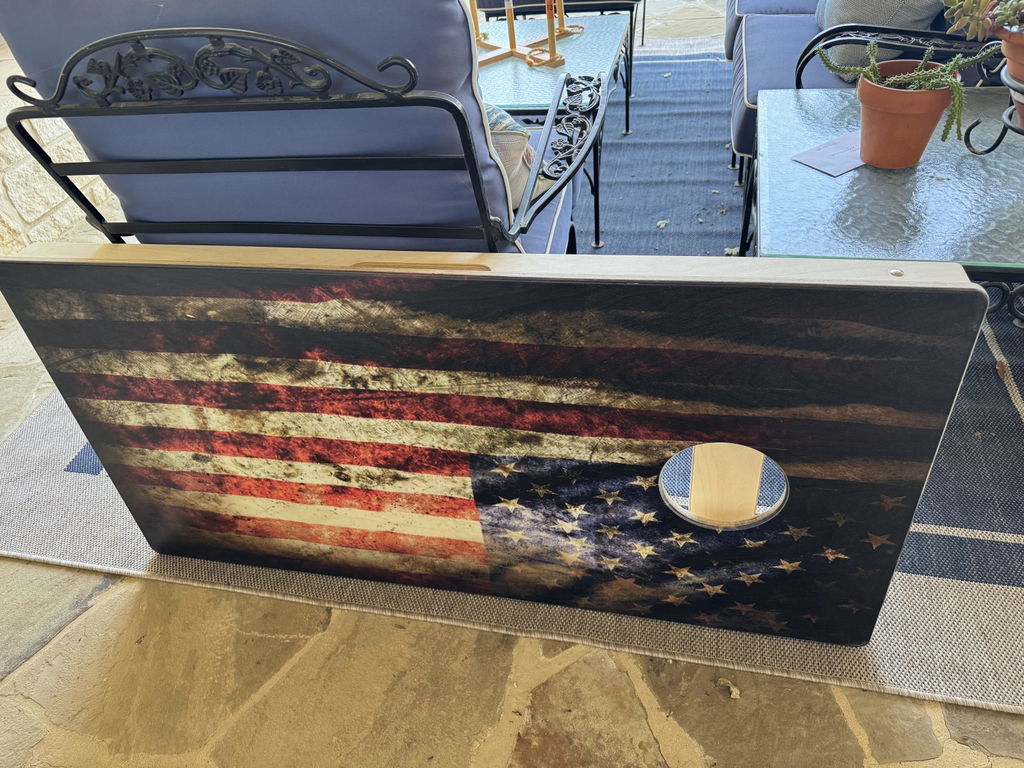
While grip technique forms the foundation of consistent throwing, the quality of your equipment plays an equally important role in achieving peak performance. Premium cornhole boards, featuring properly calibrated surfaces, regulation dimensions, and consistent playing characteristics, provide the ideal platform for developing and showcasing your refined grip techniques.
At Skip's Garage, we understand that serious players demand equipment that matches their skill level and dedication to the game. Our custom cornhole boards are meticulously constructed, ensuring every surface provides the consistent bounce, slide, and feel required for competitive play. When you design your own boards with us, you're investing in equipment that supports your grip technique development and enhances your overall playing experience.
We pride ourselves on using only the highest quality materials and construction methods, creating boards that perform consistently across all weather conditions and playing environments. Whether you're practicing your pinch grip in the backyard or executing tournament-winning throws at competitive events, our boards provide the reliable foundation your refined technique deserves.

Taking Your Game to the Next Level
Mastering cornhole grip styles represents just one element of overall game improvement, but it's a fundamental aspect that influences every throw you make. The time invested in developing proper grip technique pays dividends in consistency, accuracy, and confidence across all competitive levels.
Remember that grip development is an ongoing process that evolves with your playing experience and physical development. Stay open to refinements and adjustments as your skills progress and playing conditions change. The most successful players continuously evaluate and improve their fundamental techniques, including grip selection and execution.
Consider working with experienced players or instructors who can provide personalized feedback on your grip technique. Outside perspectives often identify subtle issues or opportunities for improvement that are difficult to recognize independently. Many competitive players attribute significant breakthrough moments in their development to grip coaching.
Your journey toward cornhole mastery deserves equipment that supports and showcases your refined skills. When you're ready to design your own boards that match your commitment to excellence, Skip's Garage is ready to create the perfect playing surface for mastering your grip technique.