The slide shot is one of the most satisfying techniques in cornhole. When executed correctly, your bag glides effortlessly across the board, slipping past blockers and settling perfectly on the surface or sliding smoothly into the hole. It's a move that combines finesse, control, and a deep understanding of board dynamics.
Whether you're competing in tournaments, playing in leagues, or dominating backyard games, mastering the slide shot can significantly elevate your game. This technique is particularly effective against opponents who try to block the hole with their bags, as a well-executed slide can navigate around or even push through defensive setups.
However, the slide shot isn't just about throwing harder or flatter. It requires precise release mechanics, proper bag selection, and, most importantly, an understanding of how your boards behave. The surface condition of your boards plays a crucial role in determining whether your slide shot will perform as intended or fall disappointingly short of its mark.
Understanding the Mechanics of a Slide Shot
The slide shot differs fundamentally from the standard arc shot. Instead of lofting the bag high and letting it drop onto the board, you release it on a flatter trajectory with more forward momentum. The bag should land closer to the front of the board and use its speed to slide toward the hole.
Your grip and release point are critical. Hold the bag with a loose, relaxed grip that allows for a smooth release. The moment of release should feel natural, not forced. Many players make the mistake of gripping too tightly, which causes the bag to spin or tumble rather than glide cleanly across the surface.
The arm motion for a slide shot resembles a bowling delivery more than a traditional cornhole toss. Your arm should swing forward in a smooth, pendulum-like motion, releasing the bag at the lowest point of the swing. This creates the flat trajectory necessary for the slide to work effectively.
Body positioning matters as well. Stand with your throwing-side foot slightly forward and your weight balanced. As you release, allow your weight to shift naturally onto your front foot. This weight transfer helps generate the forward momentum needed without requiring excessive arm strength.
Reading Your Board Surface
Not all cornhole boards are created equal, and understanding your playing surface is essential for mastering the slide shot. Board surfaces vary significantly in texture, smoothness, and their response to different weather conditions. The slide shot that works perfectly on one set of boards might fail completely on another.
Professional-grade boards typically feature smooth, consistent surfaces that allow bags to slide predictably. These boards often feature high-quality finishes that retain their characteristics across a range of temperatures and humidity levels. When practicing the slide shot, the consistency of your boards becomes your greatest asset.
Weather plays a substantial role in how boards perform. Humidity can make surfaces stickier, reducing slide distance. Heat can cause boards to expand slightly, changing their texture. Cold weather might make surfaces more slippery. Understanding these variations helps you adjust your technique accordingly.
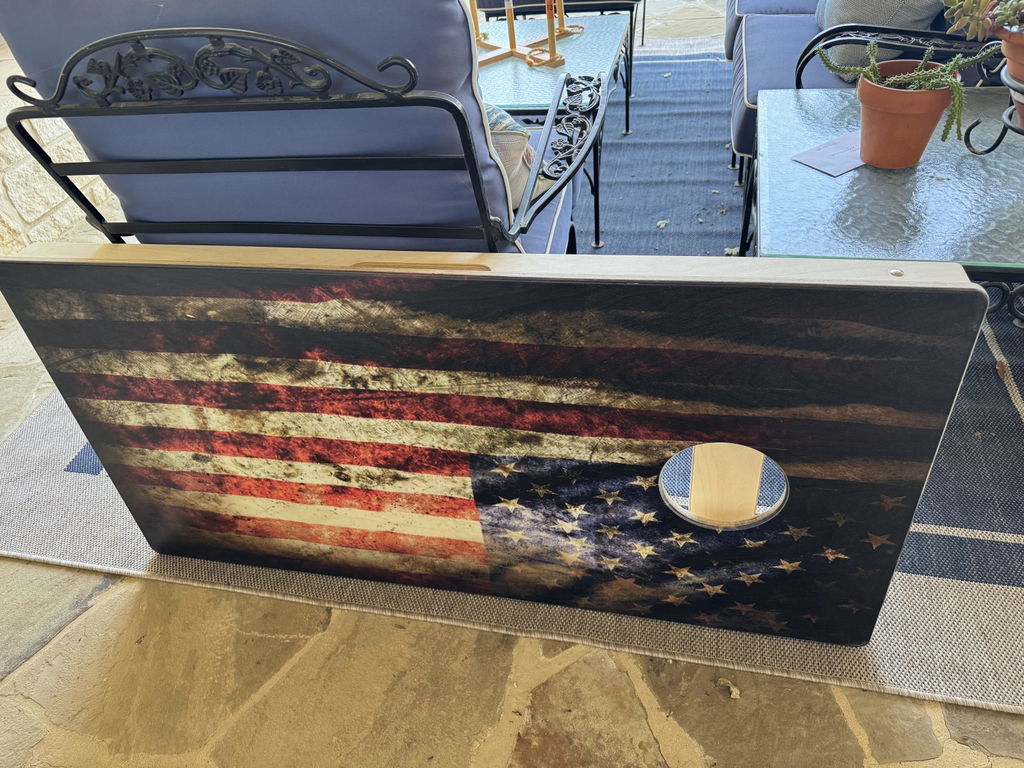
This is where investing in all weather cornhole boards makes a significant difference. These boards are specifically designed to maintain consistent playing characteristics regardless of environmental conditions. They use specialized finishes and construction methods that resist warping, moisture absorption, and temperature-related changes. For serious players looking to develop a reliable slide shot, having boards that perform consistently is non-negotiable.
The surface texture affects not just distance but also control. A slightly textured surface gives you more control over slide speed through your release technique. Extremely smooth surfaces might allow longer slides but offer less control. Finding the right balance depends on your playing style and the specific shot you're attempting.

Bag Selection and Preparation
Your choice of bags has a significant impact on the success of your slide shot. Bags vary in fill material, fabric type, and overall construction, and each variation affects how they slide across the board surface.
Fill material determines weight distribution and how the bag interacts with the board. Most competitive players use bags filled with plastic pellets, which provide consistent weight and allow for good sliding characteristics. The pellets settle in a way that creates a relatively flat surface when the bag lands, maximizing contact with the board.
Fabric type matters tremendously for slide shots. The "slow side" of most bags features a rougher, more textured fabric designed to stick to the board surface. The "fast side" uses smoother fabric that allows the bag to slide more freely. For slide shots, you'll obviously want to throw with the fast side down.
Bag condition affects performance as well. New bags often slide differently from broken-in bags. As bags are used, the fabric softens and the fill material compacts slightly, changing how they interact with the board. Many serious players keep separate sets of bags for different conditions and shot types.
Some players prepare their bags specifically for slide shots by deliberately breaking them in. This may involve repeatedly throwing them to soften the fabric or manipulating the fill to achieve the desired distribution. However, be aware that tournament regulations often prohibit certain modifications, so always check the rules before making any changes to your bags.
Developing Touch and Feel
The slide shot requires exceptional touch. Unlike power shots, where you can rely on force to compensate for slight inaccuracies, the slide shot demands precision. Developing this touch takes dedicated practice and conscious attention to feedback.
Start by practicing at a consistent distance. Stand at your normal throwing position and focus on achieving the same release point and arm speed with every throw. Pay attention to how far each bag slides and identify the variables that might be affecting the distance. Was your release point slightly different? Did you grip the bag differently? Did environmental factors change?
Distance control separates good slide shooters from great ones. You need to develop the ability to adjust your slide distance based on where bags are already positioned on the board. Sometimes you want a short slide that stops just past a blocker. Other times you need a long slide that reaches the hole from the front of the board.
Practice drills help develop this control. Set up specific scenarios with bags positioned at various points on the board, then practice sliding bags to precise spots. Challenge yourself to slide a bag so it stops touching another bag without pushing it. Try to slide bags into the hole from different starting positions on the board.
Muscle memory develops through repetition, but mindful repetition accelerates the process. After each throw, take a moment to analyze what you felt during the release and how the bag responded. This conscious connection between action and result helps your brain and body learn more effectively than simply repeating actions without reflection.
Strategic Applications
Understanding when to use the slide shot is just as important as knowing how to execute it. The slide shot isn't always the best choice, but in certain situations, it becomes your most effective weapon.
Blocking situations favor the slide shot. When your opponent has positioned bags in front of the hole, a well-executed slide can navigate past or through these obstacles. The low trajectory and forward momentum allow your bag to push through gaps that would be impossible to reach with a traditional arc shot.
Late-game scenarios often call for slide shots. When you need to knock an opponent's bag off the board or push your own bag into the hole for crucial points, the slide shot provides control and power simultaneously. The ability to deliver a bag with speed while maintaining accuracy gives you options that other shots cannot provide.
Setting up combinations becomes possible with slide shots. You might deliberately place a bag short of the hole, knowing that your partner can slide their bag off yours and into the hole. These coordinated plays require practice and communication, but can be devastatingly effective.
Defensive slide shots also serve an important purpose. Sometimes the best play isn't to score but to prevent your opponent from scoring. A slide shot that pushes their scoring bag off the board or blocks their path to the hole can swing momentum in your favor.
Common Mistakes and Corrections
Even experienced players struggle with consistency in their slide shots. Recognizing common mistakes helps you diagnose and correct problems quickly.
Over-gripping ranks among the most frequent errors. When you squeeze the bag too tightly, you cannot achieve a clean release. The bag tends to spin or tumble rather than glide smoothly. Focus on holding the bag just firmly enough to control it, then consciously relaxing your grip as you begin your throwing motion.
Incorrect release points cause inconsistent results. Releasing too early creates excessive arc, defeating the purpose of a slide shot. Releasing too late sends the bag into the board at a steep angle, causing it to stick rather than slide. The ideal release occurs when your arm reaches the bottom of its forward swing, creating a flat trajectory.
Insufficient follow-through undermines slide distance. Many players stop their throwing motion immediately after releasing the bag. A proper follow-through ensures complete energy transfer and consistent mechanics. Your arm should continue its forward motion naturally after the bag leaves your hand.
Ignoring environmental feedback leads to repeated mistakes. If your slide shots consistently fall short, the board surface might be stickier than you anticipated. If bags are sliding too far, the surface might be more slippery than expected. Adjust your technique based on what the boards are telling you rather than stubbornly repeating the same motion.
Practice Routines for Improvement
Structured practice accelerates skill development. Random throwing helps maintain general skills, but targeted drills build specific competencies.
Distance ladder drills develop control. Set markers at various points on the board and practice sliding bags to each marker in sequence. Start with the shortest slide, then gradually work toward longer distances. This trains your ability to adjust slide distance with precision.
Obstacle navigation drills prepare you for game situations. Position bags at various points on the board, creating lanes and barriers, then practice sliding bags through the gaps. Vary the width of the lanes and the position of obstacles to challenge yourself differently each session.
Pressure simulation helps prepare for competitive moments. Create scoring scenarios where you need to execute specific slide shots to win. Practice these high-pressure situations repeatedly until performing under pressure becomes routine. Mental preparation is just as important as physical skill.
Video analysis provides valuable feedback. Record your throwing motion from different angles and study your mechanics. Compare your technique to skilled players. Look for subtle differences in grip, release point, follow-through, and body positioning. Small adjustments often yield significant improvements.
Equipment Considerations
Your equipment has a direct impact on slide shot success. While skill matters most, having the right tools makes mastering the technique significantly easier.
Board quality cannot be overstated. Cheap boards with inconsistent surfaces, poor construction, or susceptibility to weather changes will frustrate your attempts to develop reliable slide shot mechanics. Professional-grade boards maintain consistent playing characteristics, allowing you to focus on technique rather than compensating for equipment deficiencies.
Investing in all-weather cornhole boards proves particularly valuable for serious players. These boards deliver consistent performance whether you're playing in humid summer conditions, dry fall weather, or cooler temperatures. The stability they provide allows you to develop muscle memory that transfers reliably across different playing environments.
Board maintenance matters too. Even high-quality boards require care to maintain optimal sliding surfaces. Clean your boards regularly to remove dirt, chalk, and other debris that can affect the behavior of your bag. Apply appropriate finishing products as recommended by the manufacturer to protect the surface and maintain its characteristics.
Bag maintenance deserves attention as well. Keep your bags clean and stored properly. Moisture can affect the weight of the bag and its interaction with the board. Dirt and debris embedded in the fabric change the sliding characteristics. Treating your equipment with care ensures consistent performance when you need it most.
Taking Your Slide Shot to Competition
Mastering the slide shot in practice is one thing. Executing it consistently in competitive situations requires additional preparation.
Tournament boards might feel different from your practice boards. Arrive early to warm up and get a feel for the playing surface. Throw several slide shots during warm-ups to calibrate your touch. Notice how the boards respond compared to what you're accustomed to, then make mental adjustments accordingly.
Mental preparation helps manage competition pressure. Visualize successful slide shots before stepping up to throw. Develop a pre-throw routine that centers your focus and triggers muscle memory. Trust the countless practice repetitions you've completed rather than overthinking the mechanics in the moment.
Adaptability separates good competitors from great ones. Conditions change throughout a tournament day. Morning humidity differs from afternoon heat. Board surfaces might wear slightly as play continues. Stay aware of these changes and adjust your technique accordingly, rather than stubbornly sticking to what has worked in the past.
Learning from each tournament accelerates improvement. After the competition, reflect on which slide shots succeeded and which failed. Identify patterns in your performance. What situations triggered success? When did you struggle? Use these insights to guide your next practice session.
Elevate Your Game with Consistent Performance
The slide shot represents one of cornhole's most versatile and effective techniques. Mastering it requires dedication, but the competitive advantage it provides makes the effort worthwhile. From navigating defensive setups to delivering clutch scoring bags, the slide shot gives you options that less skilled players simply don't possess.
Remember that consistency forms the foundation of an effective slide shot. You cannot develop a reliable technique on boards that perform differently each time you play. Equipment quality matters, particularly when you're investing time and effort into skill development.
For players serious about competitive improvement, having all-weather cornhole boards removes a significant variable from the equation. These boards enable you to practice and compete with confidence, knowing that your equipment will perform consistently, regardless of the conditions. When you eliminate equipment inconsistency, you can focus entirely on perfecting your technique.
Start incorporating slide shot practice into your regular routine. Set specific goals for improvement and track your progress to stay on track. Challenge yourself with increasingly difficult scenarios. Most importantly, be patient with the learning process. The slide shot takes time to master, but once you've developed the touch and control, it becomes an invaluable weapon in your cornhole arsenal.