There's something about tossing a beanbag across a sun-drenched backyard that brings people together. It's casual enough to spark conversation, competitive enough to reveal character, and social enough to keep everyone lingering long after the last bag has landed. Cornhole has quietly transformed from a tailgate staple into one of America's most beloved backyard sports—and along the way, it's been playing matchmaker.
Across the country, local leagues and weekend tournaments are filling parks, breweries, and community centers with players of all ages and skill levels. What started as a simple lawn game has grown into a full-blown social phenomenon, with dedicated communities forming around the sport. And where there's community, there's connection. Romance, as it turns out, doesn't always bloom in candlelit restaurants. Sometimes, it starts on a set of regulation size cornhole boards.
Meeting at the Boards
Ask any regular at a cornhole league, and they'll tell you the game has a way of breaking down walls. There's no formal dress code, no awkward small talk scripts—just two teams, four bags each, and a whole lot of friendly trash talk. That low-pressure atmosphere makes it fertile ground for genuine connection.
Take Jake and Maria, who met at a local doubles tournament in Austin, Texas. They were paired as opponents in the first round, and what began as a competitive rivalry quickly became something more. "He kept complimenting my throwing technique," Maria laughs. "I didn't know if he was flirting or just being nice. Turns out, it was both." Three years later, they're engaged—and still argue about who has the better arm.
Stories like this are surprisingly common. In cities from Nashville to Denver, cornhole leagues have quietly become some of the most effective social mixers around. The game creates a natural rhythm of interaction—partners rotate, teams shift, and players chat between rounds. Unlike a bar or a gym, the environment is inherently collaborative. You're rooting for each other, celebrating good shots, laughing off the bad ones.
What's more, the game tends to attract people who value community over competition—people who show up week after week, not just to win, but to belong. That consistency builds familiarity, and familiarity has a way of deepening into something more meaningful over time.
Competitive Love: Stronger Together
Playing cornhole as a couple brings its own unique dynamic. When you step up to the board with your partner, you're not just playing a game—you're navigating a shared goal, managing expectations, and communicating under pressure. Sound familiar? Those who play together regularly will tell you it mirrors the rhythms of a relationship more closely than you might expect.
Couples who compete together quickly learn how to read each other's moods. A missed bag after a tough round tests patience. A comeback win after a rough start builds resilience. The game, played at a proper distance on regulation size cornhole boards, demands a level of focus and coordination that naturally translates to better teamwork off the court.
Kelsey and Dan from Cincinnati have been playing in a couples' league for two years. "Cornhole has genuinely made us better communicators," Kelsey says. "We figured out pretty early that blaming each other for missed shots was a losing strategy—in the game and in our relationship." Dan grins and adds that they developed a pre-game ritual of reviewing strategy together, something that's spilled over into how they handle big decisions at home.
There's also the matter of shared celebration. Winning as a team—even at something as low-stakes as a beanbag toss—creates a sense of unity. High-fives become habits. Inside jokes form around memorable shots. A simple backyard game builds a private language between two people, one bag at a time.
Backyard Weddings: Cornhole at the Altar (Sort Of)
It was only a matter of time before cornhole made its way into wedding celebrations. Across the country, engaged couples are incorporating the game into their receptions and engagement parties—and the trend shows no signs of slowing down.
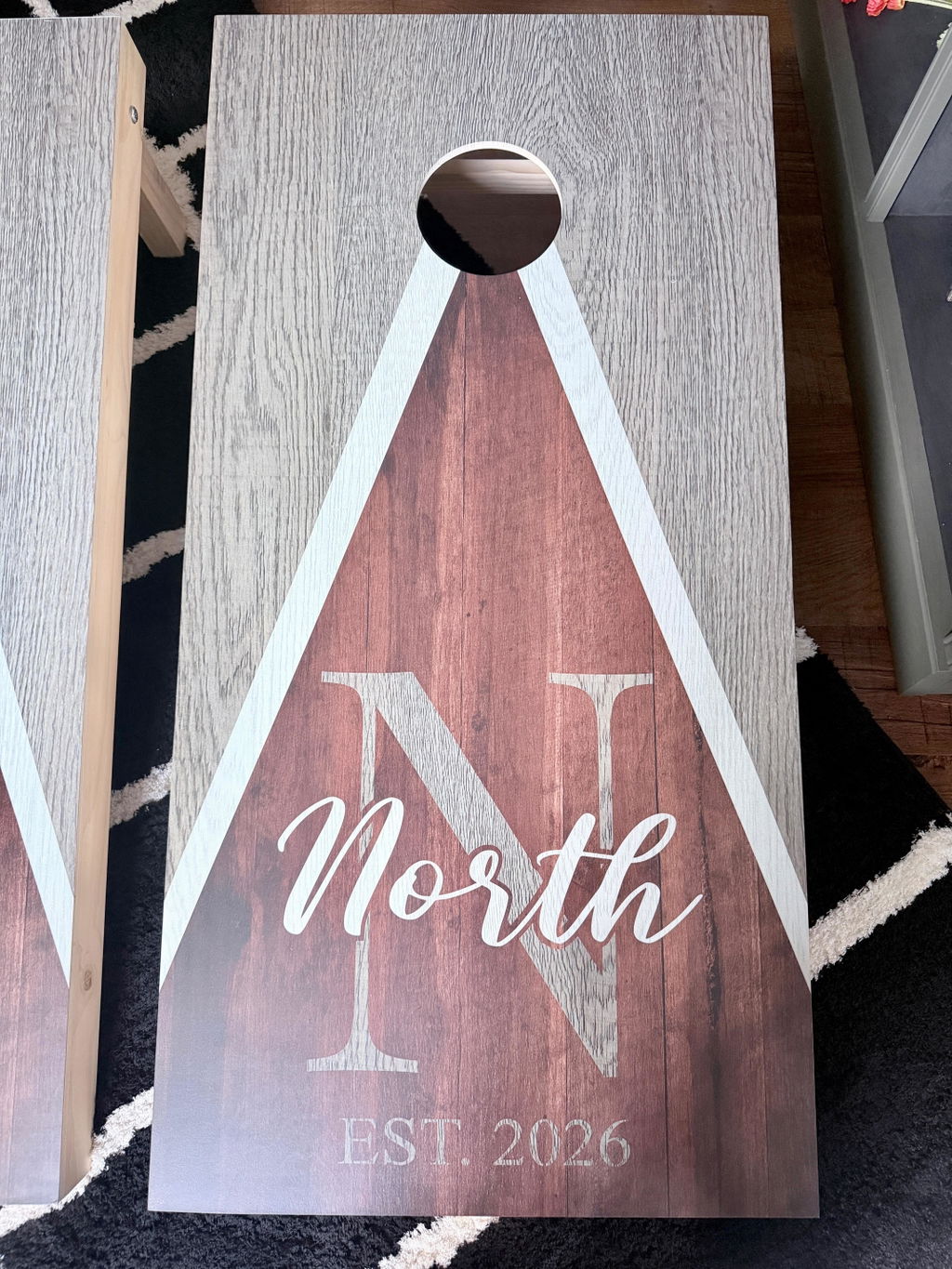
For many, it's a natural choice. The game is approachable for guests of all ages, keeps energy levels high during cocktail hour, and doesn't require a DJ or a dance floor. Couples are commissioning custom-designed boards featuring their names, wedding dates, and color schemes—turning a beloved game into a personalized piece of the day.
One couple in Georgia had their engagement photos taken with their custom boards. Another used a cornhole tournament as the centerpiece of their rehearsal dinner, with family members competing in bracket-style rounds throughout the evening. The winning team got a custom trophy; everyone got a memory.
For couples who bonded over the game, incorporating it into their wedding feels authentic rather than quirky. It's a nod to their story—a way of saying "this is how we found each other" without a single word of explanation. The boards themselves often become keepsakes, displayed in homes or garages long after the wedding night has passed.
Tips for Couples: Building Your Cornhole Chapter Together
Getting started as a cornhole couple is easier than you might think. Most cities have local leagues that welcome players at every skill level, from complete beginners to seasoned veterans. A quick search for cornhole leagues or associations in your area will usually turn up options—many of which offer beginner nights or mixers specifically designed for new players.
When you're ready to invest in your own set, quality matters more than most people realize. The difference between a flimsy backboard and a properly crafted set of regulation size cornhole boards is immediately noticeable. Boards that are built with care—using quality materials, precise dimensions, and durable finishes—make the game more consistent and more enjoyable. They also last, which matters when the boards carry sentimental value.
Balancing competition and romance takes a little intention. The couples who navigate it best tend to set a few simple ground rules: no dwelling on missed shots, celebrate each other's wins genuinely, and remember that the point of playing together is the "together" part. Winning is fun; winning with someone you love is better.
Keeping it fresh also helps. Mix up your routine by playing in different settings, entering occasional tournaments, or challenging friends to doubles matches. Cornhole has a way of fitting into almost any social setting—tailgates, block parties, camping trips—which means it grows alongside your relationship rather than staying confined to one chapter of it.

The Community Built One Bag at a Time
Cornhole's rise as a social force is no accident. The game is built for human connection unhurried, accessible, and endlessly adaptable. It gives people a reason to show up, a reason to stay, and often, a reason to come back.
The couples who found each other through the game will tell you it wasn't just luck. It was the culture around the boards, the welcoming atmosphere, the running jokes, the shared investment in a community that created the conditions for something real to grow. The game was the setting; the people made the story.
At Skip's Garage, we believe that every set of boards has the potential to become the backdrop for exactly that kind of story. That's why we put real care into every board we build—because we know what happens around them matters. High-quality craftsmanship, vibrant custom designs, and construction built to last mean your boards will be part of your story for years to come. Whether you're setting up for a backyard tournament, a wedding reception, or a first date disguised as a casual game, you deserve a set that holds up to every moment.
The love stories have already started. The only question is what yours will look like—and where it will begin.