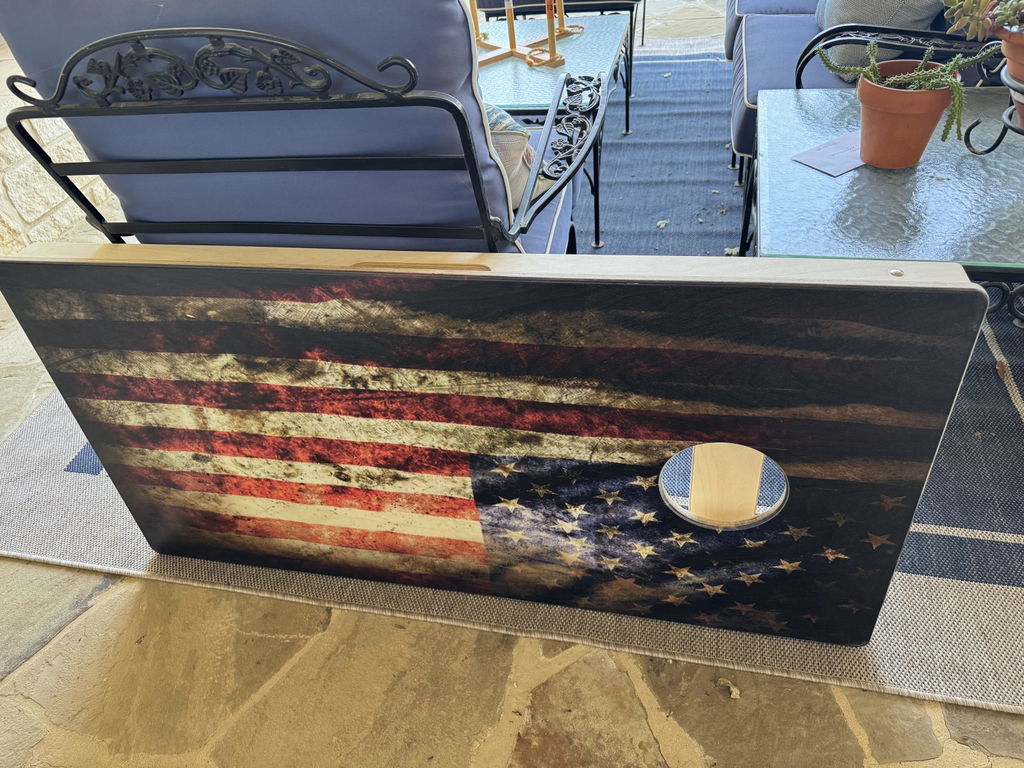
Cornhole is a classic backyard game enjoyed by millions. Its appeal lies in its simplicity; anyone can learn the basics and start playing right away. While the concept is straightforward, understanding the scoring rules is key to turning a casual toss into a competitive match. This guide will walk you through everything you need to know to score a game of cornhole accurately, so you can focus on the fun.
At Skip's Garage, we take pride in the quality of our products, and we want to ensure you get the most out of them. A great game begins with a solid setup and a thorough understanding of the rules.
Setting Up Your Cornhole Game
Before you can score, you need to set up the playing area correctly. The distance between cornhole boards is crucial for a fair game. According to the official rules, the front edges of the two boards should be 27 feet apart. For younger players or those who prefer more casual games, you can shorten this distance to make it more accessible. Place the boards on a flat surface, with the boards facing each other. Once the boards are in position, you're ready to play.

Understanding the Basics of Scoring
Cornhole scoring is quite simple once you get the hang of it. The game is played in rounds, or "innings," where each player or team throws their four bags. Points are tallied at the end of each inning using cancellation scoring.
A bag that goes through the hole is worth three points. This is called a "cornhole."
A bag that lands and stays on the board's surface is worth one point. This is known as a "woody."
A bag that does not land on the board, touches the ground before landing on the board, or is knocked off the board by another bag earns zero points.
How Cancellation Scoring Works
Cancellation scoring is what makes cornhole strategic. After all eight bags have been thrown in an inning, each team's points are compared. Only one team can score in each inning.
To determine the score, you subtract the lower-scoring team's points from the higher-scoring team's points. For example, if Team A scores five points (one cornhole and two on the board) and Team B scores two points (two bags on the board), Team A would earn three points for that inning (5 minus 2). Team B would score zero.
If both teams score the same number of points in an inning, no one scores, and the game moves to the next round. The team that scored in the previous inning throws first in the next one. If no one scored, the team that threw first in the last inning throws first again.
Winning the Game
The first team to reach or exceed 21 points at the end of an inning wins the game. It is important to note that you do not need to win by two points. A final score of 21 to 20 is a perfectly valid win. Also, there's no "bust" rule in standard cornhole; if a team's score goes over 21, they still win.
Ready to Play?
Now that you understand the rules of scoring and the proper distance between cornhole boards, you are ready to host your own games with confidence. Cornhole is more than just a game; it's a way to bring people together for friendly competition and fun.
At Skip's Garage, our commitment to quality ensures you get the best possible playing experience every time. We build each set with high-quality materials and personal attention because we believe in providing a product that lasts. We personally guarantee you will be satisfied with your purchase. Now, get out there and start tossing!